
;}%3c/style%3e%3cclipPath%20id='clippath'%3e%3crect%20class='cls-1'%20width='74.7'%20height='75.8'/%3e%3c/clipPath%3e%3c/defs%3e%3cg%20class='cls-2'%3e%3cpath%20d='m57.4,0C45.7,0,40.1,7.6,40.1,20.2v22.6c0,12.3,4.3,20.1,13.5,20.1s10.6-4,12-10l.5,8.5h8.3V28.6h-17.6v9h6.7v7.6c0,5.1-1.7,8.6-5.8,8.6s-6-3.5-6-9.5v-26.1c0-6.2,2.1-9.4,5.9-9.4s5.8,2.5,5.8,7.1v5.4h10.7v-5.7C74.1,5.7,68.3,0,57.4,0'/%3e%3cpath%20d='m25.8,29.7c4.8-1.4,7.8-5.6,7.8-11.5v-2c0-9-5.2-14.8-16.3-14.8H.7v60h16.9c11.2,0,16.6-6.1,16.6-16.3v-1.8c0-7.8-3.3-11.9-8.4-13.6M12.4,9.5h3.4c4.1,0,5.7,2.2,5.7,7v1.9c0,5.7-1.5,8.4-5.7,8.4h-3.4V9.5Zm9.8,35.4c0,5.5-1.6,8.4-5.7,8.4h-4.1v-18.9h3.8c4.1,0,6,2.5,6,8.5v2.1Z'/%3e%3c/g%3e%3crect%20y='70.2'%20width='74.7'%20height='5.6'/%3e%3c/svg%3e)
Date: May 26
Author: Timothy Soar
The London commercial property market has been moving steadily toward refurbishment-led delivery as landlords respond to tighter ESG expectations, embodied-carbon scrutiny, planning realities and the growing commercial risk of obsolescence in older offices. That shift matters in a city like London because so much of its commercial fabric is already built. The opportunity is not abstract; it is sitting there in Georgian terraces, post-war frames and tired late-20th-century office stock that still contain enormous value: in their structure, their materials, their location and their cultural presence. The task now is to upgrade what exists. Done properly, refurbishment is not a compromise. It is a more exacting form of architectural intelligence.
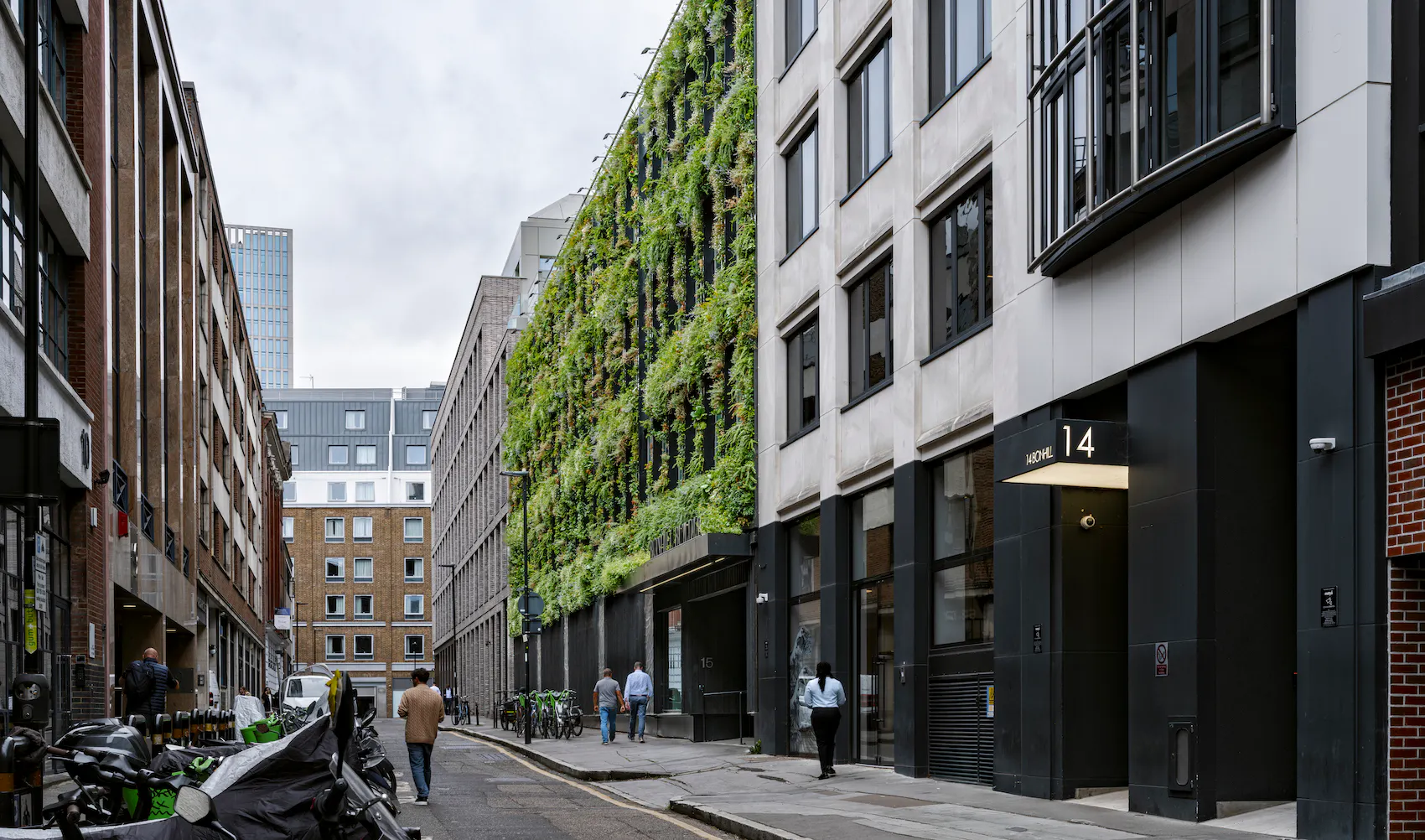
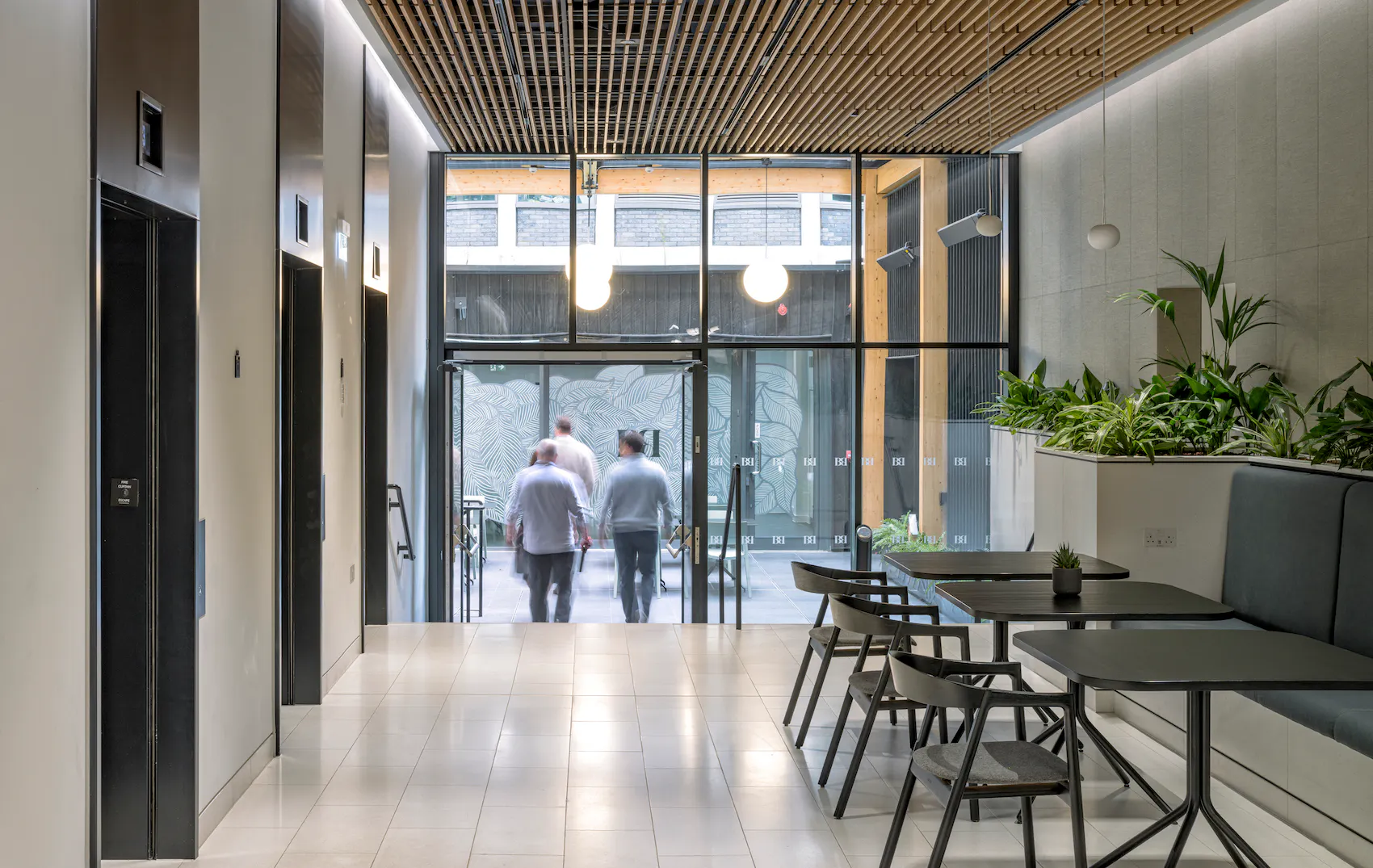
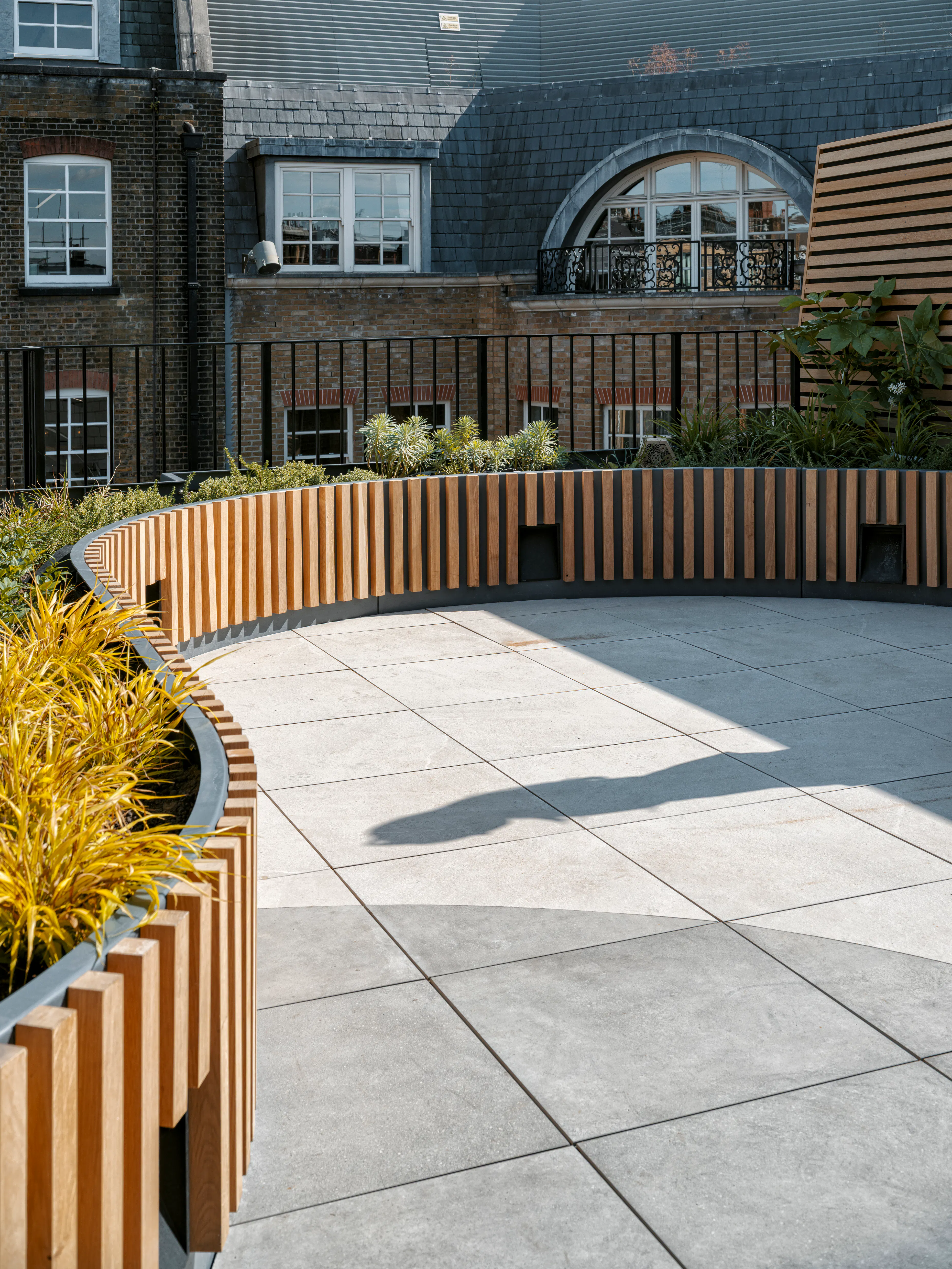
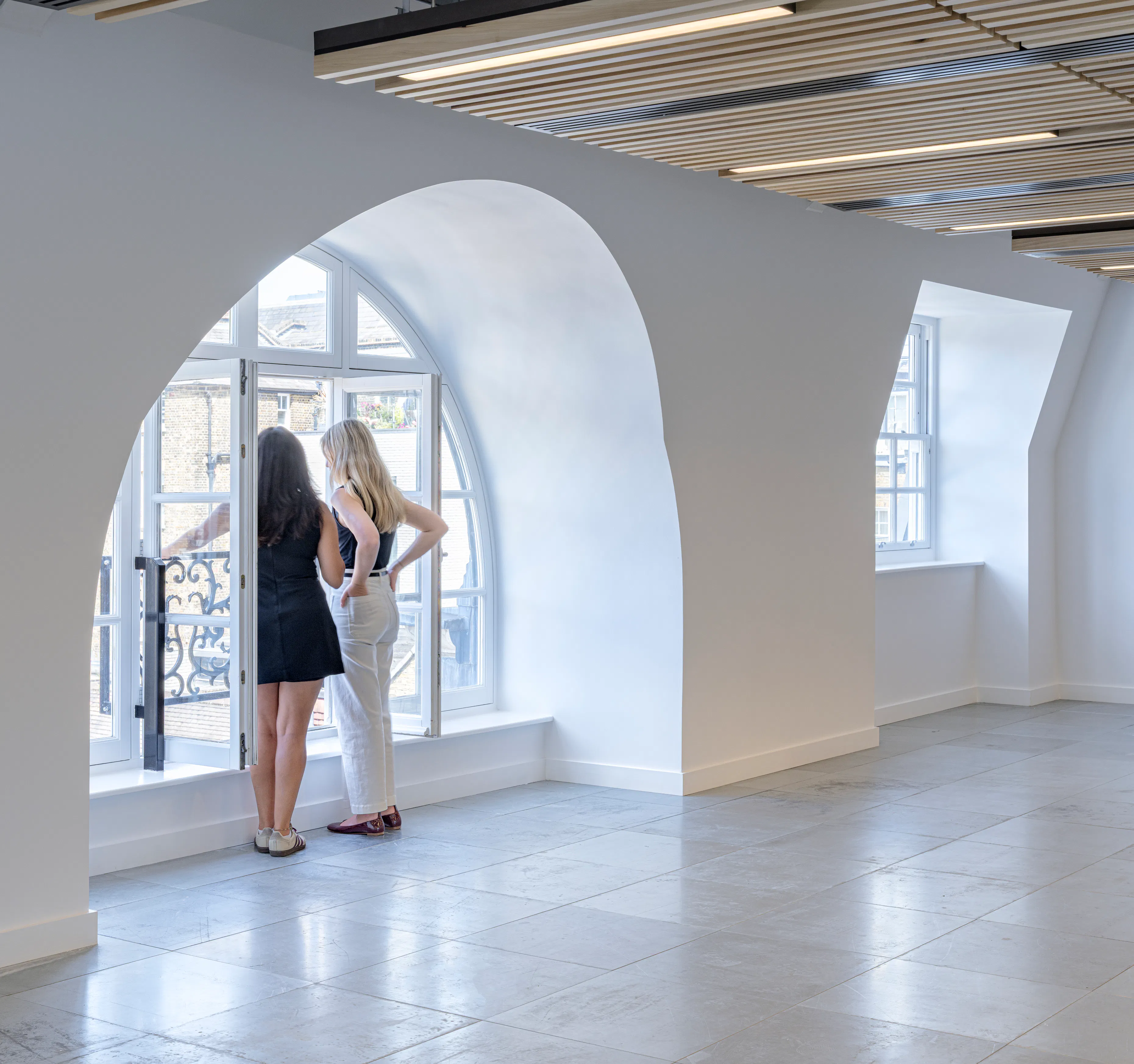
I recently photographed two projects by Barr Gazetas that exemplify this approach: 42 Wigmore Street in Marylebone and15 Bonhill located between the City and Shoreditch. The value of these projects lies in their iterative intelligence. They don’t pretend that a single dramatic move can solve the environmental crisis. Instead they accumulate gains across many layers: retained structure, upgraded envelope, lower embodied carbon, all-electric services, efficient lighting, rainwater harvesting, cycle provision, showers, cleaner air, openable windows, biodiverse planting, greener roofs, external amenity, better circulation, and more durable communal space. That is how meaningful change often happens in the commercial city: not through one heroic flourish, but through a disciplined series of interlocking decisions.
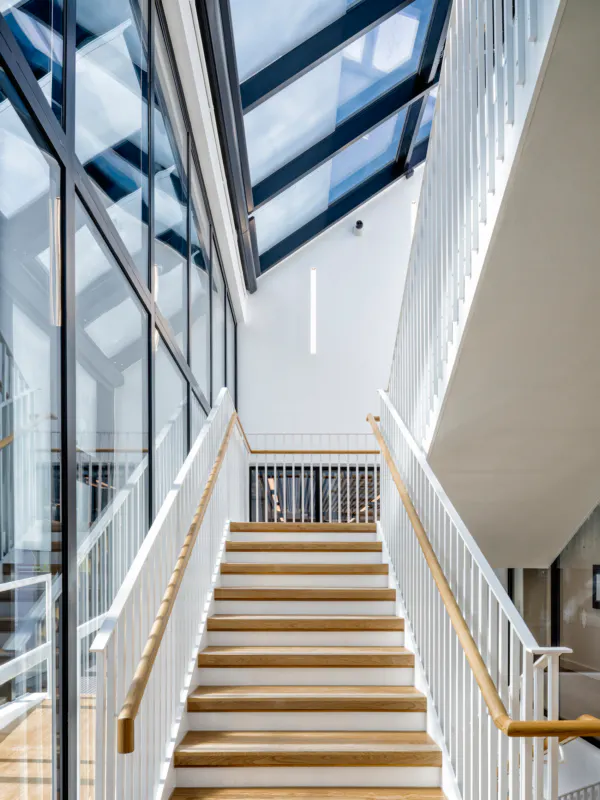
That is where much of London’s best commercial work now sits: not in grand tabula-rasa gestures, but in careful acts of reconfiguration that preserve fabric and cut carbon while, crucially, showing how environmental performance and commercial value increasingly converge. A remodelled façade that improves daylight and thermal performance is not only better for energy use; it also changes how a workplace is occupied and perceived. A relocated stair that turns an old lightwell into a daylit circulation route does not just optimise planning; it supports movement, visibility, social connection and reduced dependence on lifts. Roof terraces, courtyards, planted walls and biodiverse roofs are not decorative extras. In a dense city, they are part of the environmental recalibration of the office: mitigating heat, supporting urban greening, improving wellbeing and making workspaces more attractive to tenants.
In architecture, grand gestures are generally expensive – materially, financially and ecologically. They photograph well at first glance, but they can be extractive. Iterative moves are different. They work with the grain of a building. They accept constraint as a design condition. They see latent value in the ordinary. They ask what can be repaired, repositioned, opened up, insulated, replanted, re-serviced and re-inhabited. They understand that a regenerative future will not be built from exceptional new objects, but from the slow improvement of the city we already have.
Please rotate your device